Many buildings constructed in Kenya before the early 2000s may still contain asbestos-containing materials (ACMs). Once considered an ideal construction material because of its durability, fire resistance, and affordability, asbestos is now recognized as a serious health hazard when its fibers become airborne.
If you’re planning to renovate, demolish, purchase an older property, or replace an aging roof, it’s important to know how to identify potential asbestos materials. However, it’s equally important to understand that you cannot confirm the presence of asbestos simply by looking at a material. Proper inspection and laboratory testing are the only reliable methods.
In this guide, we’ll explain where asbestos is commonly found, the warning signs to look for, and what to do if you suspect asbestos is present.
What Is Asbestos?
Asbestos is a naturally occurring mineral made up of microscopic fibers. Because it is heat-resistant, durable, and an excellent insulator, it was widely used in construction materials for decades.
The danger arises when asbestos-containing materials are damaged, drilled, cut, broken, or deteriorate with age. This can release tiny fibers into the air that may be inhaled, increasing the risk of serious respiratory diseases.
Where Is Asbestos Commonly Found?
In older residential, commercial, and industrial buildings, asbestos may be present in:
- Corrugated asbestos roofing sheets
- Flat cement roofing panels
- Ceiling boards
- Wall partition boards
- Water storage tanks
- Rainwater gutters
- Floor tiles
- Pipe insulation
- Boiler insulation
- Fireproof panels
- Cement cladding
- Roofing ridges
- Industrial insulation materials
Asbestos was commonly used because it strengthened cement products while providing excellent fire resistance.
Signs Your Property May Contain Asbestos
Although asbestos cannot be identified by sight alone, several indicators may suggest its presence.
1. The Building Is Older
Properties built several decades ago are more likely to contain asbestos materials, particularly in roofing, insulation, ceilings, and water tanks.
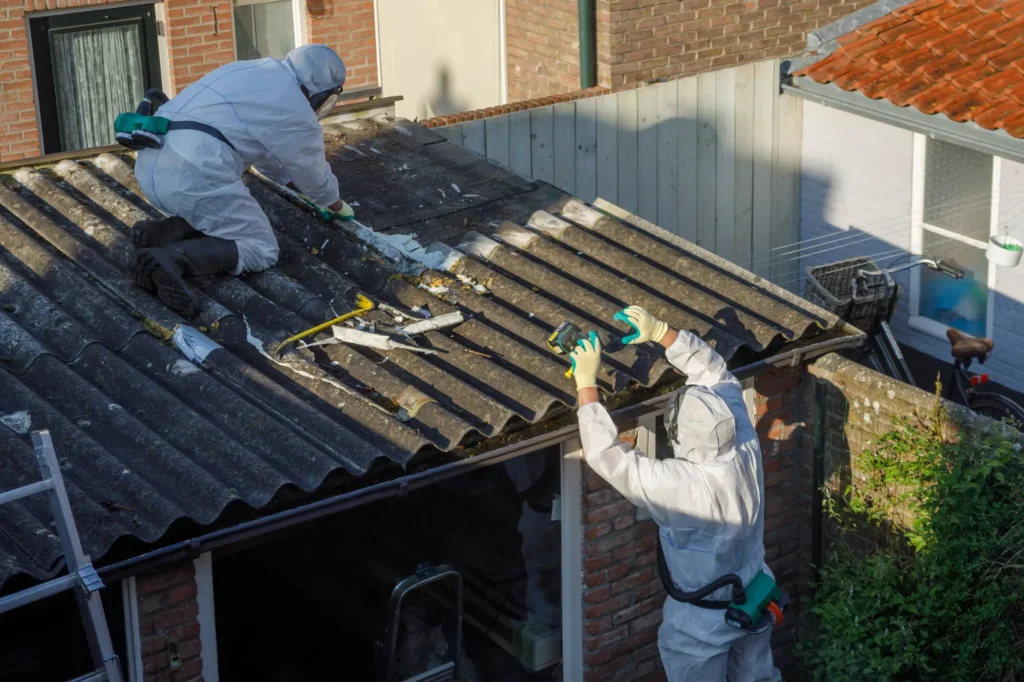
2. Cement Roofing Sheets
Older corrugated roofing sheets that appear grey, thick, and cement-like may contain asbestos.
These roofs are commonly found on:
- Residential homes
- Schools
- Churches
- Factories
- Warehouses
- Farm buildings
3. Aging or Damaged Roofing
If roofing sheets are:
- Cracked
- Broken
- Weathered
- Flaking
- Moss-covered
- Chipped
they should be inspected before any repair or replacement work begins.
4. Old Water Tanks
Many older cement water tanks were manufactured using asbestos cement.
If your property has an aging concrete or cement storage tank, it should be professionally assessed before removal or replacement.
5. Ceiling Boards
Some older ceiling boards and fire-resistant panels may contain asbestos.
Avoid drilling, sanding, or breaking them until they have been inspected.
6. Pipe Insulation
Industrial buildings, hospitals, factories, and older commercial properties sometimes contain asbestos insulation around hot water pipes and boilers.
Can You Identify Asbestos by Looking at It?
No.
Many asbestos-containing materials look almost identical to modern fiber cement products.
Only professional sampling and laboratory analysis can confirm whether asbestos is present.
Never rely on appearance alone.
Why You Should Never Disturb Suspected Asbestos
One of the biggest mistakes property owners make is attempting to remove old roofing sheets or ceiling boards themselves.
Activities such as:
- Cutting
- Breaking
- Drilling
- Grinding
- Sanding
- Demolition
can release dangerous asbestos fibers into the air.
These fibers are invisible and may remain airborne for long periods before settling.
Health Risks Associated with Asbestos Exposure
Long-term exposure to airborne asbestos fibers has been linked to serious diseases, including:
- Asbestosis
- Lung cancer
- Mesothelioma
- Chronic respiratory diseases
- Pleural disease
These illnesses often develop many years after exposure, making prevention extremely important.
What Should You Do If You Suspect Asbestos?
If you believe your property contains asbestos:
Do Not
- Break the material
- Drill into it
- Pressure wash it
- Remove it yourself
- Burn asbestos waste
- Dispose of it in ordinary dumpsites
Instead, keep people away from the affected area until it can be professionally assessed.
The Importance of Hiring a NEMA-Licensed Contractor
In Kenya, asbestos removal is a regulated activity.
A licensed contractor ensures:
- Proper risk assessment
- Safe containment procedures
- Trained removal personnel
- Appropriate protective equipment
- Secure transportation
- Disposal at approved facilities
- Full regulatory compliance
- Project documentation and reporting
Hiring an experienced contractor protects your family, employees, neighbors, and the environment.
Our Professional Asbestos Management Services
At Jali Ecosystems Limited, we provide complete asbestos management solutions, including:
- Site inspections and assessments
- Safe asbestos roof removal
- Asbestos collection and packaging
- Licensed transportation
- Approved disposal
- Site decontamination
- Compliance documentation
- Health, Safety & Environmental (HSE) management
Our team is fully licensed by NEMA and follows strict industry standards throughout every project.
Frequently Asked Questions
Is every old roof made from asbestos?
No. While many older roofs were made using asbestos cement, some were manufactured from other materials. Only professional testing can confirm whether asbestos is present.
Is asbestos dangerous if left untouched?
Asbestos-containing materials that remain in good condition and are undisturbed generally present a lower risk. However, if they become damaged, weathered, or are disturbed during renovations or demolition, they can release hazardous fibers into the air.
Can I dispose of asbestos myself?
No. Asbestos waste must be handled, transported, and disposed of according to Kenyan environmental regulations by qualified professionals.
How long does asbestos removal take?
The timeline depends on the size of the project, the type of asbestos-containing materials, and the safety measures required. A professional site assessment will provide a clear project schedule.
Protect Your Property with Professional Asbestos Removal
If your home, school, office, warehouse, factory, or commercial building contains old roofing sheets or other suspected asbestos materials, don’t take unnecessary risks.
Jali Ecosystems Limited provides safe, compliant, and efficient asbestos inspection, removal, transportation, and disposal services across Kenya. Our experienced team follows strict Health, Safety, and Environmental (HSE) standards to ensure every project is completed safely and in full compliance with NEMA regulations.
Contact Jali Ecosystems Limited today to schedule a professional asbestos site assessment and receive expert guidance on protecting your property and the people who use it.